Originally published by CU Business.
So far in 2021 the mortgage environment has felt like a reversal of 2020’s anomalous events.
Furthermore, as if hedging mortgage risk wasn’t complicated enough, 2021 has brought some interesting updates and trends—the outcome of which could make hedging and investing in mortgage debt more challenging. Below are key highlights on current market conditions and regulatory implications.
Higher Rates, Tighter Spreads
Over the last year, the 10-Year U.S. Treasury rate has increased substantially. Currently, the rate resides at 1.44%, which is 71bps higher over the year and 52bps higher year-to-date (YTD). However, according to the Freddie Mac Primary Mortgage Market Survey® (PMMS), the 30-year mortgage rate is actually lower by 22bps over the last year, although it is 29bps higher YTD. While this may seem counterintuitive, this result means a tighter primary/secondary (P/S) mortgage spread, which was widely expected. The P/S spread measures the primary mortgage rate, currently around 2.96% according to FHLMC PMMS, less the yield on a par-priced mortgage-backed security (MBS). Currently the P/S measures 1.18%, down 41bps from one year ago when it was significantly wider and is much closer to its long-run average of around 1.10%.
Premiums and pay-ups shrink
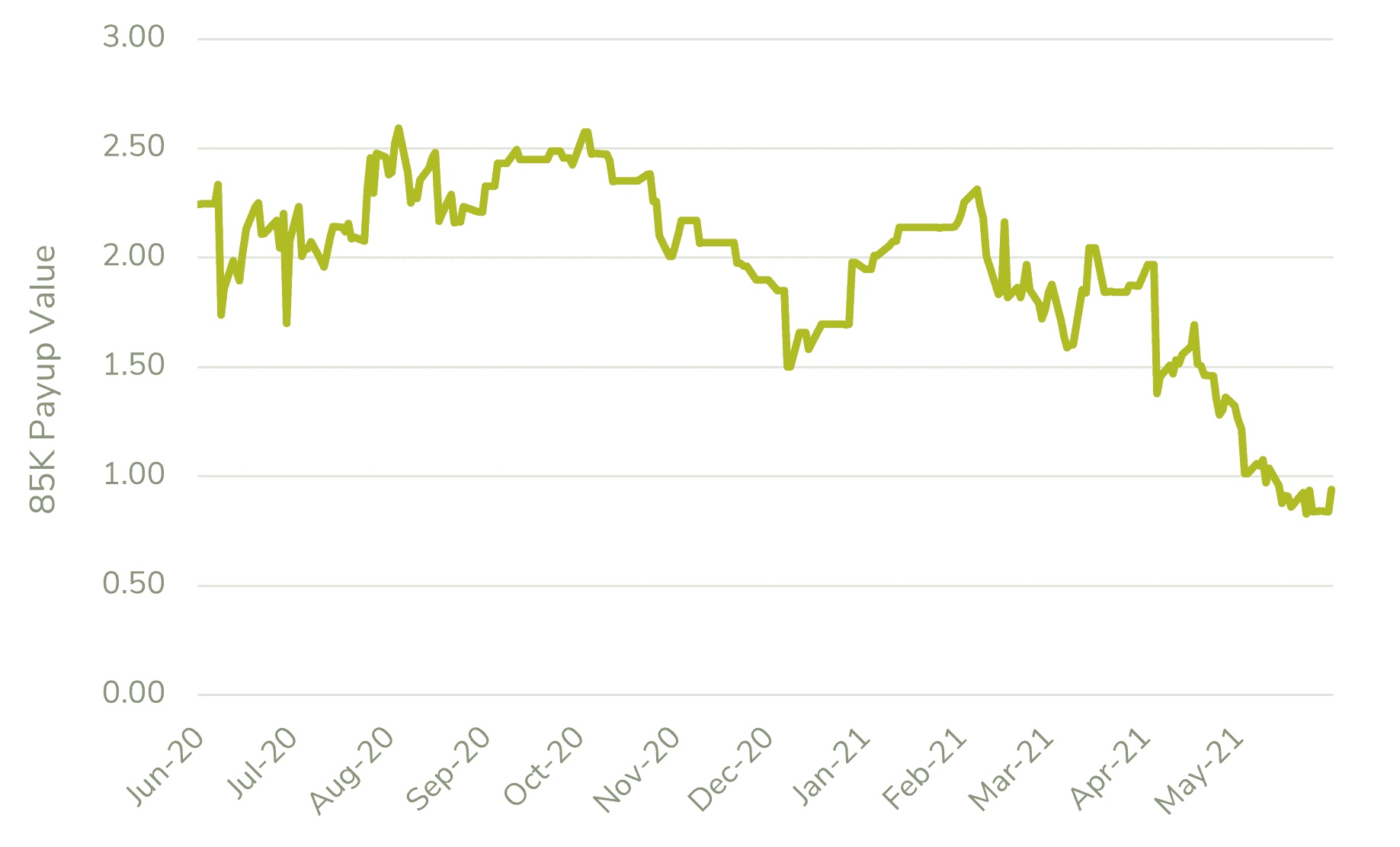
The golden age of mortgage gain-on-sale premiums may be behind us. While the P/S spread is still a bit wider than pre-pandemic levels, it has largely returned to normal. And not just that – pricing from Fannie and Freddie has as well. The premium for a primary-rate 30-year mortgage is much lower than mid-pandemic. Premiums are down anywhere from 1 to 3 points as 104-handle prices become rarer. Additionally, pay-ups have collapsed—a reversal of their widening into 2020’s refinance boom. Pay-ups are characteristics of mortgage pools that investors “pay up” for, such as low loan balance (LLB) pools. LLB pay-up values are a form of call protection, or prepayment protection since the incentive to refinance is lower. As such, they tend to move directionally with rates. As rates decrease pay-ups would be expected to increase as call protection gets more valuable in a less certain prepayment environment. When rates rise, the refinance share of prepayments falls, and prepayment speeds overall become more predictable as they become largely a function of the housing turnover rate. Indeed, investors and hedgers alike are seeing their pay-ups decline sharply as the market is becoming more comfortable with today’s prepayment environment. Figure 1 demonstrates this trend visually.
Figure 1: 85K Max Loan Balance Pay-up on a Primary-Rate 30-Year Mortgage