Over the last decade, the number of credit unions has declined by approximately 30%; however, mergers dwindled during the first few quarters of 2020 as the many uncertainties forced CUs to focus on internal operational effectiveness.
Now that most credit unions have adjusted to a “new normal” in daily procedures, we are seeing renewed interest in strategic mergers as a viable option for long-term sustainability and relevance.
The Industry Is Actively Preparing for More Mergers
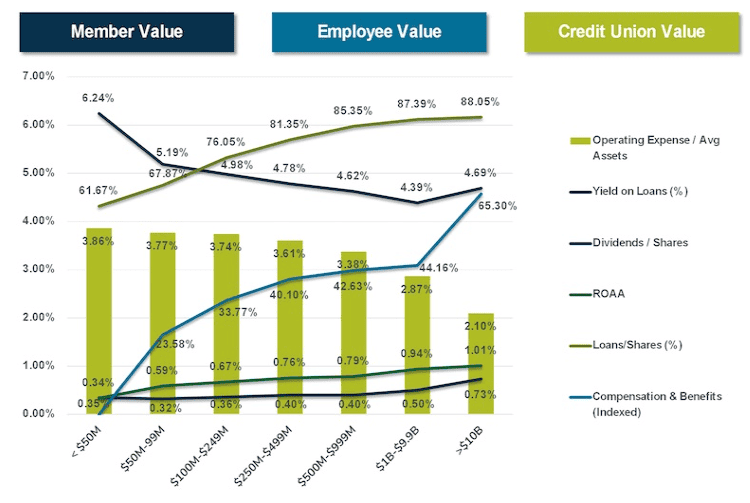
Credit unions are actively preparing for proactive and reactive mergers as the industry continues to consolidate while the macroeconomic environment remains uncertain. Now more than ever, industry leaders are focusing on achieving scale to endure reduced earnings, offering convenient service through digital and physical channels, diversifying the membership base, and improving technological infrastructure. See the graphic below, which quantitatively demonstrates how scale provides value back to members, employees and the credit union.
Such common challenges as succession planning or attracting specialized employees with in-demand skills like cybersecurity expertise may impact smaller institutions disproportionately, making mergers more attractive.