
Ensure Your Institution is Effectively Meeting CECL Regulatory Requirements
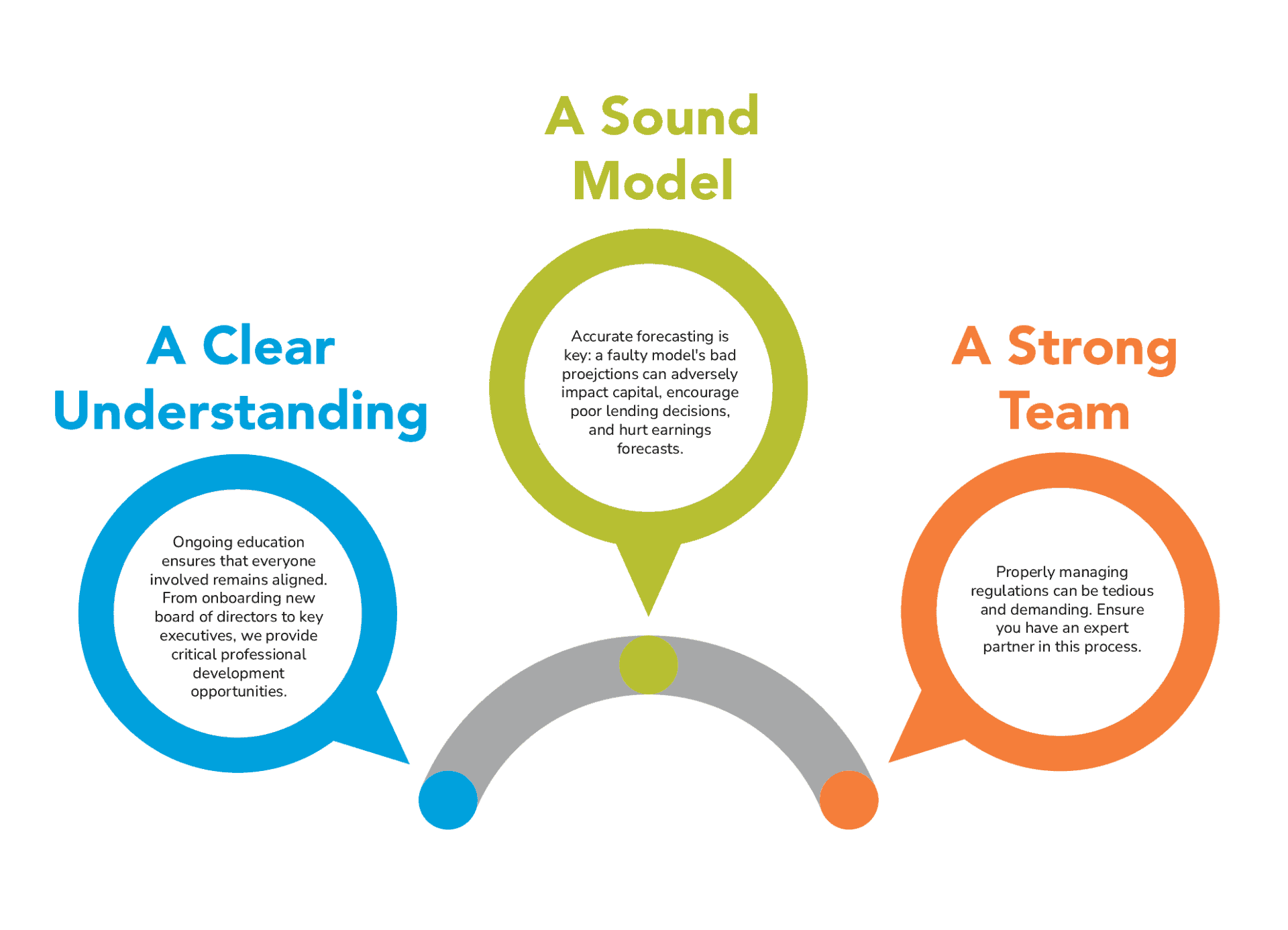
Under CECL, precision in forecasts directly impacts your institution’s bottom line. Partner with ALM First Analytics to ensure a robust and transparent model is being used. The CECL model can put additional stress on a financial institution, making ongoing awareness, a sophisticated model, and expert management must-haves for success.
CECL Pro: A Turn-Key Solution
Impacting institutions of all sizes, CECL requires a shift in organization. A successful model is based upon strong forecasting methods, trustworthy processing, meticulous data collections, proper accounting integration, and accurate reporting and implementation. ALM First Analytics, as your partner, assists with these necessary components and provides a timely, turn-key solution: CECL Pro.
CECL Pro is the source your institution needs:
- Modeling that produces thorough, transparent analytics
- Runs multi-variable regression analyses
- Performs sensitivity & scenario tests
- Based on statistical rigor & capital markets expertise
- Various concentration analysis abilities (e.g., by geography, indirect dealers, etc.)
- Provides board, auditor, & examiner defense.
The CECL model applies to loans, Held-to-Maturity (HTM) securities, net investments in leases, and off-balance sheet items such as loan commitments, standby letters of credit, and financial guarantees.
The CECL model does not apply to assets measured at fair value, including Available-for-Sale (AFS) securities and loans held for sale.
There is not a specific look-back period requirement. However, as a rule of thumb, the look-back time period should be at least equal to the average remaining life of the portfolio/segment. Ideally, the institution would utilize data from the past decade in order to incorporate before-and-after financial crisis data.
No, FASB does not explicitly require any specific calculation model. Different methods ALM First considers and can utilize include a discounted cash flow analysis, average charge-off method, vintage analysis, static pool analysis, migration analysis, and probability-of-default method.
The CECL model applies the effective interest rate (the book rate at origination adjusted for any net deferred fees, costs, premiums, or discounts) as the discount rate. Doing so applies the same credit indicators (FICO, term, LTV, etc.) the institution used when underwriting the loan. Moreover, this valuation is not intended to represent fair market value, but rather highlight future expected losses.
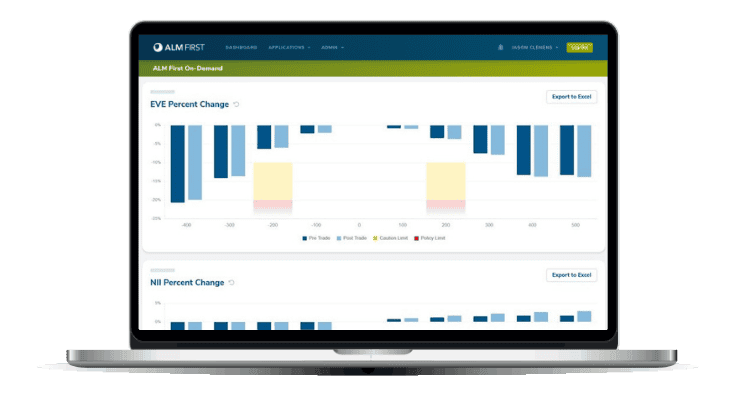
Analytics That Empower. Tools That Deliver.
Experience the power of smarter decision-making with our secure, web-based ecosystem. Designed for financial institutions, my.almfirst.com delivers rich data, advanced analytics, and intuitive dashboards—all in one place. Access on-demand tools to optimize strategies and drive stronger balance sheet performance.
